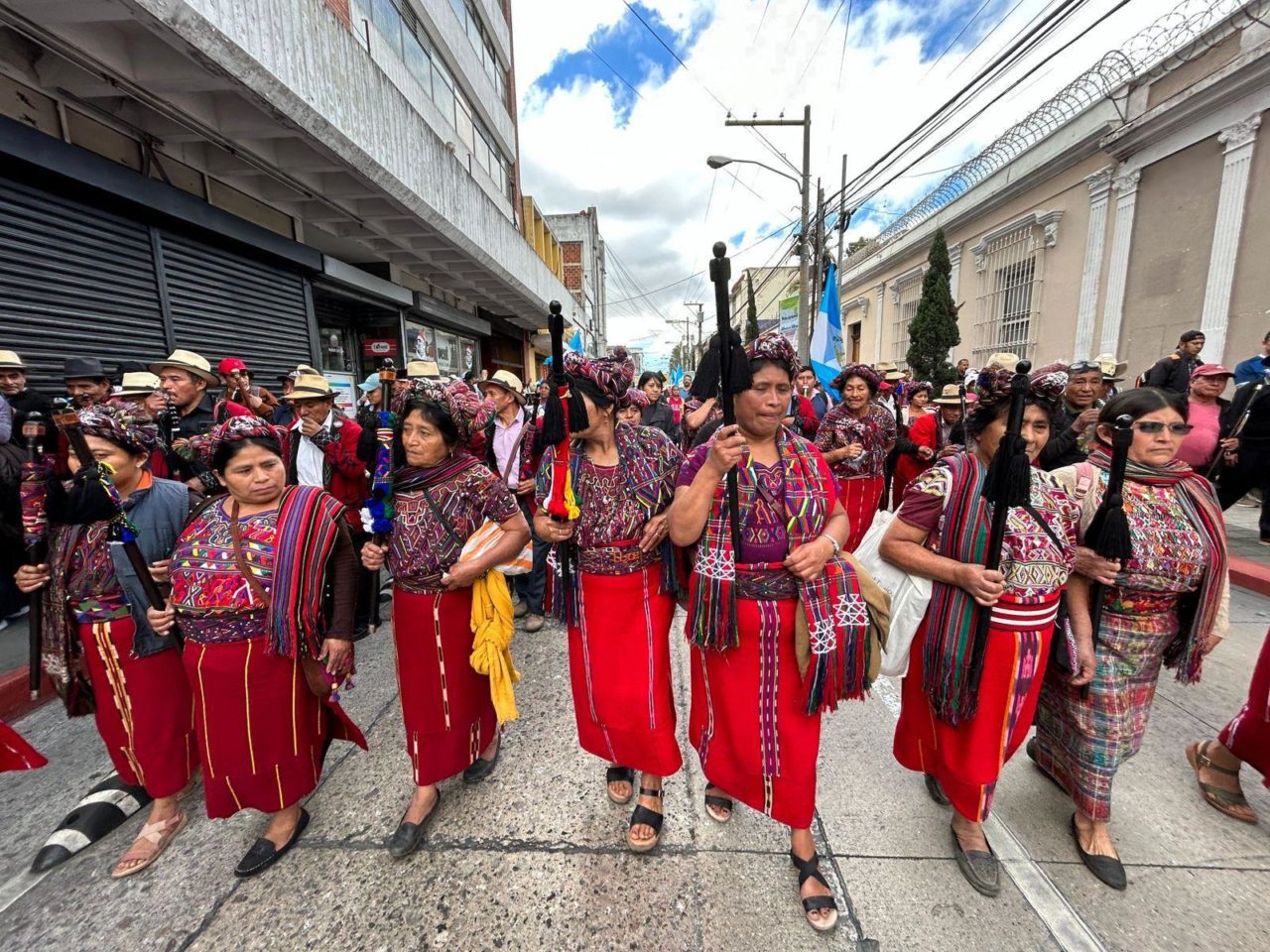
Amid persistent exclusion and repression, Guatemala’s Indigenous communities continue to raise their voices against the power structures that seek to silence them. Despite threats, criminalization, and legal proceedings against them, Indigenous leaders and collectives remain steadfast in their fight to defend their territories, human rights, and autonomy in a country where elites have historically marginalized Indigenous peoples.
The report underscores that Indigenous communities throughout different parts of the country are confronted by political, corporate, and governmental forces seeking to advance extractive ventures or curb their social demands, and the resistance shown by community leaders, including calls for consultations with local residents before any mining or hydroelectric initiatives move forward, has heightened tensions with authorities and powerful economic groups.
The Repression of Indigenous Demonstrations
One of the tactics denounced is the increasing criminalization of Indigenous protests. Community leaders have been subjected to arrests and legal processes aimed at delegitimizing their demands. Amnesty International and other organizations have noted that the Guatemalan state’s actions violate fundamental rights, including the right to peaceful protest and the defense of Indigenous territories.
The case of Bernardo Caal Xol, a prominent leader among the Q’eqchi’ people, remains notable in this context, as his 2018 conviction related to demonstrations opposing a large hydroelectric development on the Cahabón River turned his situation into a powerful emblem of state-driven repression targeting defenders of natural resources and Indigenous rights.
A Test for the Political and Economic Order
Despite efforts to silence their struggle, these Indigenous movements have challenged the country’s political and economic system. On several occasions, they have halted major projects by demanding adherence to international agreements that guarantee their participation, such as the International Labour Organization’s Convention 169.
These uprisings extend beyond disputes over land, reflecting a broader struggle to affirm their identity, safeguard their culture, and secure control over their future, even as they confront a political environment that shows little genuine concern for their claims.
The Indigenous resistance in Guatemala not only defies the elites’ attempts to maintain their dominance but also proves that even under the most challenging conditions, the fight for the dignity and recognition of Indigenous peoples endures.
Reference: No Ficción – https://no-ficcion.com/las-voces-indigenas-que-el-poder-de-guatemala-no-logra-callar/

